For classical Indian astronomy, Ujjain was the centre of the world. The first meridian of longitude ran through it, and the Tropic of Cancer passes close by — which is why the city's timekeeping mattered to the entire subcontinent.
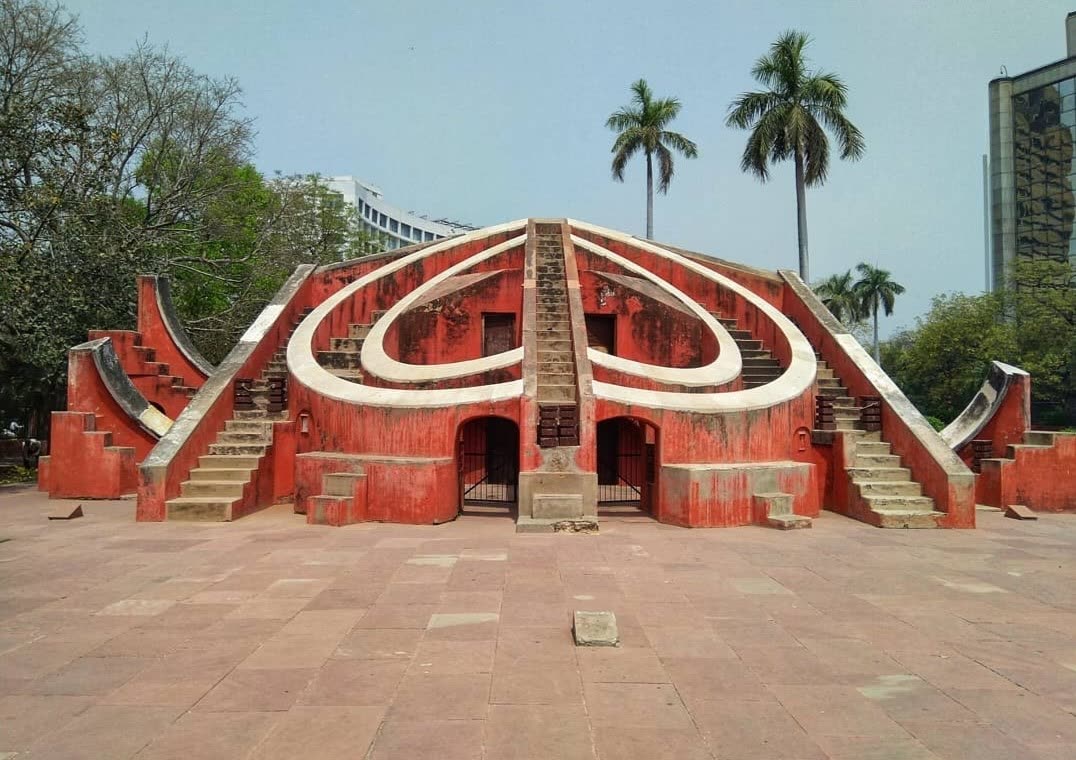
The Vedh Shala, built by Raja Jai Singh II in the 1720s, is the observatory that did the measuring. It is one of five he built; the others are at Jaipur, Delhi, Mathura and Varanasi.
What still works
Four masonry instruments survive: the Samrat Yantra (a giant sundial accurate to the minute), the Nadi Valaya Yantra, the Digamsha Yantra and the Bhitti Yantra. They are not museum pieces behind glass — they are used, and the Hindu almanac (panchang) published from Ujjain is still computed here.
Worth it for
Students, anyone travelling with curious children, and anyone who wants a break from temple queues. Give it forty minutes, and go on a clear day — the sundial needs sun.
- OpenSunrise – sunset
- EntryNominal ticket
- LocationJaisinghpura
- HighlightWorking 18th-century sundials
Tip — Go on a clear day — the Samrat Yantra sundial needs direct sun to read.